There’s a persistent myth in the food world that gluten-free baking is inherently less nutritious than its wheat-based counterpart. As someone who’s spent years developing recipes that are both delicious and allergen-friendly, I can tell you, that doesn’t have to be true. In fact, with the right choices, gluten-free desserts can deliver MORE fiber than traditional baked goods.
Recent reports from Everyday Health and Real Simple highlight what I’ve seen firsthand: most Americans aren’t getting enough fiber, and those on gluten-free diets often struggle even more. The good news? Your dessert could be part of the solution.
Why Fiber Matters on a Gluten-Free Diet
Most adults consume far less than the recommended 25, 35 grams of fiber daily. That deficit isn’t just a number, it impacts heart health, blood sugar regulation, and digestive wellness in measurable ways.
On a gluten-free diet, eliminating whole-wheat sources means you need to be intentional about where fiber comes from. The standard gluten-free aisle doesn’t always help: many packaged products are high in calories and sugar, yet low on fiber and protein. The solution isn’t avoidance. It’s smart ingredient choices.
5 Ways to Add More Fiber to Gluten-Free Desserts
1. Swap to Fiber-Rich Gluten-Free Flours
Not all gluten-free flours are created equal. Almond flour provides about 3g of fiber per quarter cup, while coconut flour packs 5g per quarter cup. Buckwheat and oat flours are excellent options too.
In my experience creating gluten-free desserts, swapping just half the flour in a recipe for almond flour can double the fiber content without sacrificing flavor. The texture actually improves, you get a moister, denser crumb that feels more indulgent, not less.
2. Add Seeds for a Nutritional Punch
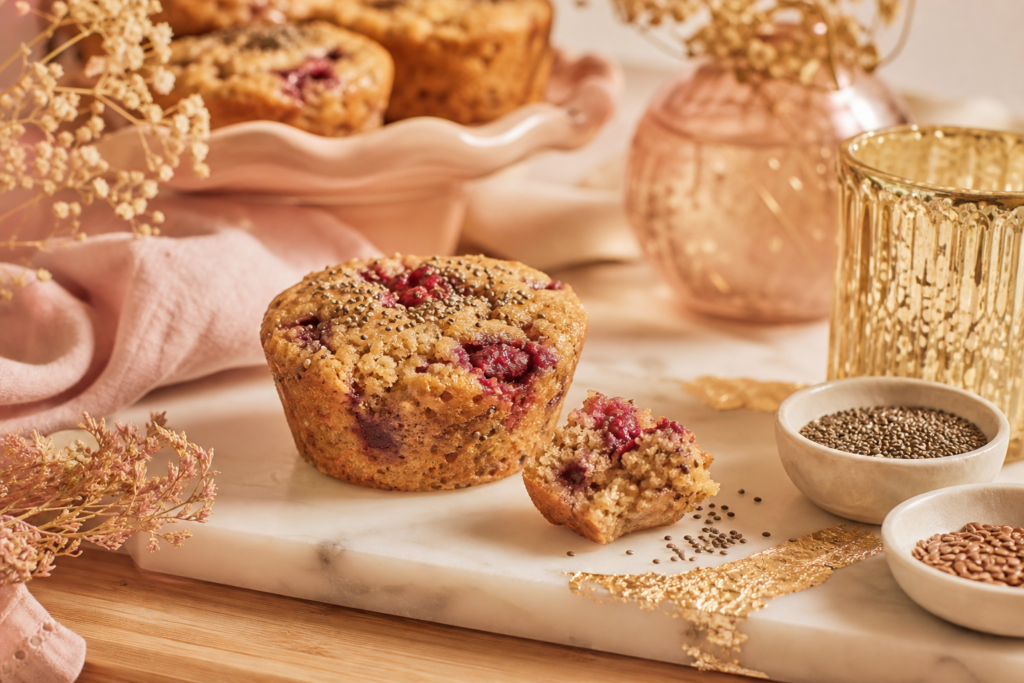
Chia seeds (10g of fiber per ounce) and flax seeds (7.5g per ounce) are nearly flavorless superheroes. They work beautifully as egg replacements in vegan baking, just mix 1 tablespoon of ground flax with 3 tablespoons of water for a “flax egg.”
Sprinkle them on top for visual appeal and a subtle crunch, or fold them directly into the batter. Either way, you’re adding fiber without changing the taste profile.
3. Use Whole Fruits as Natural Sweeteners
Raspberries deliver 8g of fiber per cup. Pumpkin purée provides 7.1g per cup. Mashed bananas add sweetness AND fiber in one step.
One challenge many gluten-free bakers face is dryness, fruit purées solve that while boosting nutrition. They replace some of the fat you’d normally use, creating a tender result that doesn’t compromise on richness.
4. Try Legume-Based Flours (Surprisingly Delicious)
Chickpea flour and lentil flour bring protein AND fiber while creating a surprisingly tender crumb. They work especially well in savory-sweet applications like chocolate chickpea brownies.
Don’t let the name fool you. When paired with cocoa, vanilla, and a touch of maple syrup, you’d never guess the base ingredient. The fiber payoff is significant, chickpea flour delivers roughly 6g of fiber per half cup.
5. Don’t Forget Avocado
Yes, avocado in dessert! With 10g of fiber per whole fruit plus healthy monounsaturated fats, it creates the creamiest dairy-free chocolate mousse and frosting you’ve ever tasted.
It’s one of those ingredients that disappears into the recipe while doing heavy nutritional lifting. If you haven’t tried an avocado-based chocolate mousse, you’re missing one of the great gluten-free hacks.
Sample High-Fiber Gluten-Free Dessert Ideas
- Flourless Almond Butter Blondies with Chia Seed Topping. Dense, fudgy, and packed with healthy fats and fiber.
- Pumpkin-Oat Fiber Muffins with Flax, A breakfast-worthy muffin that tastes like a treat.
- Dark Chocolate Avocado Mousse with Raspberries, Silky, rich, and loaded with antioxidants.
Tips for Getting It Right
- Start small. Replace 25% of your flour with almond or chickpea flour. You’ll notice the fiber boost without a dramatic shift in texture.
- Adjust liquids. Seeds absorb moisture, so add 1. 2 Tablespoons of extra liquid if your batter feels too thick.
- Use puréed fruits strategically. They replace some fat AND add fiber simultaneously, a double win for both nutrition and moisture.
- Read labels on gluten-free packaged goods. Many contain minimal fiber despite premium pricing. Homemade gives you control over what goes in.
Frequently Asked Questions
Q: Can gluten-free baking actually be high in fiber?
A: Absolutely. By choosing fiber-rich alternative flours and strategic add-ins like seeds and fruits, gluten-free desserts can exceed the fiber content of their wheat-based counterparts.
Q: What is the best high-fiber gluten-free flour?
A: Coconut flour leads with about 5g of fiber per quarter cup, followed by almond flour (3g) and buckwheat flour (3g). Chickpea flour is also worth considering at roughly 6g per half cup.
Q: Will adding fiber change the taste of my desserts?
A: Not when done right. Seeds like chia and flax are nearly flavorless, and fiber-rich fruits like banana and pumpkin actually enhance both taste and texture.
Q: How much fiber should a gluten-free dessert aim for per serving?
A: Aim for 3, 5g per serving. That’s a meaningful contribution toward the daily recommendation of 25. 35G, especially when combined with fiber from your other meals.
Q: Is there a gluten-free dessert that’s both indulgent AND high in fiber?
A: Dark chocolate avocado mousse is one of my favorites. The avocado delivers 10g of fiber per fruit, the cocoa provides antioxidants, and the result tastes like pure indulgence. Nobody needs to know it’s good for them.
Ready to Transform Your Baking?
I put together a free High-Fiber Gluten-Free Baking Cheat Sheet, a printable guide with flour swaps, seed ratios, and three starter recipes you can try tonight. It’s the resource I wish I’d had when I started experimenting with fiber-rich gluten-free baking.
Sign up below to get instant access. And if you try any of these methods, I’d love to hear how it turned out, leave a comment or tag me on social media.
Baked with purpose. Served with love.