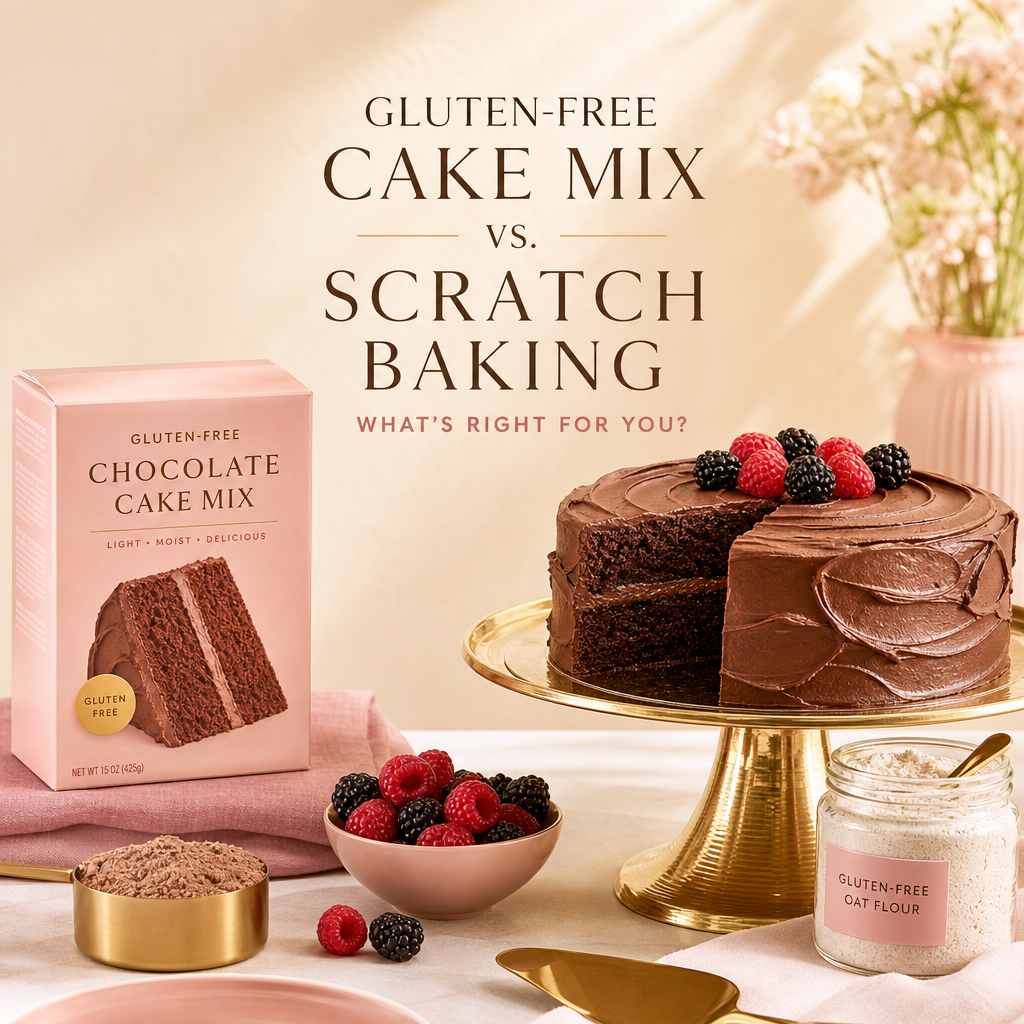
The Kitchn just tested 20 gluten-free cake mixes side by side, and the winner might surprise you. King Arthur Baking Company’s Gluten-Free Chocolate Cake Mix took the top spot, beating out brands that have been chasing the gluten-free dream for years.
As someone who has spent years building a brand around allergy-friendly desserts, I felt a little jolt of excitement reading that. Not because a boxed mix can replace what we do at Eme’s Baked Goodness, but because it proves something I have believed for a long time: gluten-free baking is no longer a compromise. It is a choice.
So here is the real question. If a boxed mix can win a blind taste test, when should you still bother baking from scratch? I tested, I tasted, and I have some thoughts.
<h2>What the Cake Mix Taste Test Revealed</h2>
The Kitchn’s editors baked and evaluated 20 different gluten-free cake mixes, scoring them on flavor, texture, ease of preparation, and overall appeal. The results were encouraging for anyone who has ever felt disappointed by a crumbly, gritty gluten-free bake.
King Arthur’s mix stood out for its rich chocolate flavor and surprisingly tender crumb. Several other mixes scored well for convenience and consistency, offering textures that would be difficult to distinguish from their gluten-containing counterparts in a blind test.
The bigger takeaway? The technology behind gluten-free baking has advanced dramatically. Starch blends, moisture-retaining ingredients, and better flour alternatives mean that box mixes in 2026 are not the sad, dense pucks they were five years ago.
But "good enough for a box mix" and "as good as scratch" are still two different things.
<h2>The Case for Box Mixes</h2>
I want to be clear: I am not here to shame anyone for using a box mix. There are absolutely times when reaching for a box is the right call.
<strong>Speed matters.</strong> When your child’s birthday party is in three hours and you just realized the cupcakes need to be nut-free and gluten-free, a reliable box mix is a lifesaver. One thing I have learned creating desserts for clients with food allergies is that stress is the enemy of joyful baking.
<strong>Consistency matters.</strong> If you are feeding a crowd and need every single piece to look and taste uniform, a commercial-quality mix gives you predictability that scratch baking sometimes cannot. This is especially true if you are not an experienced baker.
<strong>Convenience wins sometimes.</strong> Camping trips, potlucks, last-minute office treats. There are a hundred moments in life where the goal is a delicious, safe cake, and a box mix gets you there without a trip to four different stores for specialty flours.
<strong>Kids can participate.</strong> There is genuine magic in letting a five-year-old pour, stir, and decorate without worrying about precise measurements. Box mixes lower the barrier to entry for little hands in the kitchen.
<h2>What Box Mixes Cannot Replace</h2>
Now here is where I get honest. As someone who navigates both celiac-safe and nut-free baking daily, I know that box mixes, no matter how good, still live inside certain constraints.
<strong>Texture.</strong> The best scratch-baked gluten-free cakes have a moisture and tenderness that comes from using whole-food flours, fresh eggs, and real fats in proportions you control. Oat flour behaves differently than rice flour. Coconut flour absorbs liquid in ways that a pre-measured blend simply cannot account for.
<strong>Flavor depth.</strong> When I bake from scratch, I can layer flavors: a hint of espresso in chocolate cake, vanilla bean paste instead of extract, brown butter instead of neutral oil. Box mixes are designed for broad appeal, which often means muted, one-note flavor profiles.
<strong>Ingredient control.</strong> This matters most for families managing multiple allergies. A box mix might be gluten-free, but it could contain soy, dairy, or other allergens. Baking from scratch means you know every single ingredient that goes into the cake, and you can substitute freely.
<strong>Presentation.</strong> When you are creating a dessert for a special occasion, a wedding, a corporate event, or a dinner party, the difference between a boxed mix and a scratch bake is visible. The crumb structure, the way frosting adheres, the subtle variations in color, these details communicate care.
<h2>My Go-To Scratch Recipe: A Simple Gluten-Free Chocolate Cake</h2>
This is the recipe I reach for when I want a cake that feels indulgent, looks beautiful, and is completely nut-free. It uses oat flour, which is accessible, affordable, and gives a tender, neutral-flavored crumb.
<strong>Nut-Free Gluten-Free Chocolate Cake</strong>
<em>Ingredients:</em>
- 2 cups certified gluten-free oat flour
- 1 cup coconut sugar
- ½ cup unsweetened cocoa powder
- 1½ teaspoons baking powder
- 1 teaspoon baking soda
- ½ teaspoon fine sea salt
- 2 large eggs, room temperature
- 1 cup full-fat coconut milk, shaken well
- ⅓ cup melted coconut oil
- 2 teaspoons pure vanilla extract
- 1 cup hot water or brewed coffee
<em>Instructions:</em>
- Preheat your oven to 350°F. Grease and line two 8-inch round cake pans with parchment paper.
- In a large bowl, whisk together the oat flour, coconut sugar, cocoa powder, baking powder, baking soda, and salt.
- In a separate bowl, whisk the eggs, coconut milk, coconut oil, and vanilla until smooth.
- Pour the wet ingredients into the dry and stir until just combined. The batter will be thick.
- Slowly pour in the hot water or coffee and stir gently. The batter will thin out. This is normal.
- Divide evenly between the two prepared pans.
- Bake for 28 to 32 minutes, until a toothpick inserted in the center comes out with just a few moist crumbs.
- Cool in pans for 10 minutes, then turn out onto a wire rack to cool completely before frosting.
This cake has a deep, dark chocolate flavor and a crumb so tender it melts on your tongue. It pairs beautifully with a simple coconut cream frosting or a dark chocolate ganache.
<h2>How to Know When to Use Each</h2>
Here is the honest decision framework I use:
<strong>Reach for a box mix when:</strong>
– You are short on time and need a guaranteed result
– The occasion is casual (weeknight dessert, school snack, camping)
– You want to involve kids in baking without the precision of scratch recipes
– You are feeding a large group and need uniformity
<strong>Bake from scratch when:</strong>
– The event is special and you want the dessert to reflect that
– You need to control ingredients for multiple allergies
– You want deep, layered flavor that a mix cannot replicate
– You are building a skill and want to understand how gluten-free flours behave
– You are serving clients or guests who notice the difference
Neither option is wrong. The best bakers I know keep both in their toolkit.
<h2>Frequently Asked Questions</h2>
<strong>What is the best gluten-free cake mix in 2026?</strong>
According to The Kitchn’s taste test of 20 mixes, King Arthur Baking Company’s Gluten-Free Chocolate Cake Mix was the top performer, praised for its rich flavor and tender texture.
<strong>Can I substitute gluten-free flour in a regular cake recipe?</strong>
You can, but it is not always a one-to-one swap. Gluten-free flours behave differently in terms of moisture absorption, structure, and rise. For best results, use a recipe specifically developed for gluten-free flours or a measured all-purpose gluten-free blend.
<strong>Is scratch baking healthier than using a box mix?</strong>
Scratch baking gives you full control over ingredients, which means you can reduce sugar, use whole-food flours, and avoid allergens. However, "healthier" depends entirely on what you put in. A scratch cake with three cups of sugar is not inherently better than a thoughtful box mix.
<strong>Are gluten-free cake mixes safe for people with celiac disease?</strong>
Look for mixes labeled certified gluten-free, as this indicates they have been tested to contain fewer than 20 parts per million of gluten. Always check the full ingredient list and manufacturing facility information if cross-contamination is a concern.
<h2>The Bottom Line</h2>
The gluten-free baking world has never been better. Box mixes have earned their place in our kitchens, and there is zero shame in reaching for one. But scratch baking still holds the crown for flavor, texture, and the kind of care that makes a dessert unforgettable.
If you are curious about which clean, luxury ingredients make gluten-free baking truly exceptional, I put together a free guide that breaks it all down. It covers the flours, sweeteners, and techniques I use daily at Eme’s Baked Goodness to create desserts that happen to be gluten-free, not in spite of it.
<strong>Download the free Clean Luxury Ingredients Ebook</strong> and start baking with confidence.
<a href="https://emesbakedgoodness.com">Download the Ebook</a>
Baked with purpose. Served with love.
<a href="https://www.goldbelly.com/restaurants/emes-baked-goods/">Shop gluten-free gifts. Ships nationwide.</a>